
Disclosure: This article contains affiliate links. If you buy through them, we may earn a small commission at no extra cost to you. We only recommend services we believe are genuinely useful for travelers to Japan.
For many visitors, the autumn food in Japan is the best part of a fall trip. As the maple leaves turn red and gold, the country celebrates shokuyoku no aki — the “appetite of autumn,” a season when the harvest is at its peak and food takes center stage. If you’re traveling in fall, knowing what’s in season will make every meal better. Here’s what to eat and where to find it.
Planning your trip around the seasons? See our best time to visit Japan guide for weather, foliage, and packing tips.
Why autumn is Japan’s tastiest season
After the intense summer heat, autumn brings cool, comfortable weather and an abundance of freshly harvested ingredients. Rice is newly milled, mushrooms emerge in the forests, fruit ripens, and the sea offers some of its best catches of the year. Japanese cuisine is deeply seasonal, so restaurants and markets shift their menus to highlight these autumn flavors — meaning you’ll taste things in fall that simply aren’t available at other times.
The best autumn foods to try in Japan
1. Matsutake mushrooms
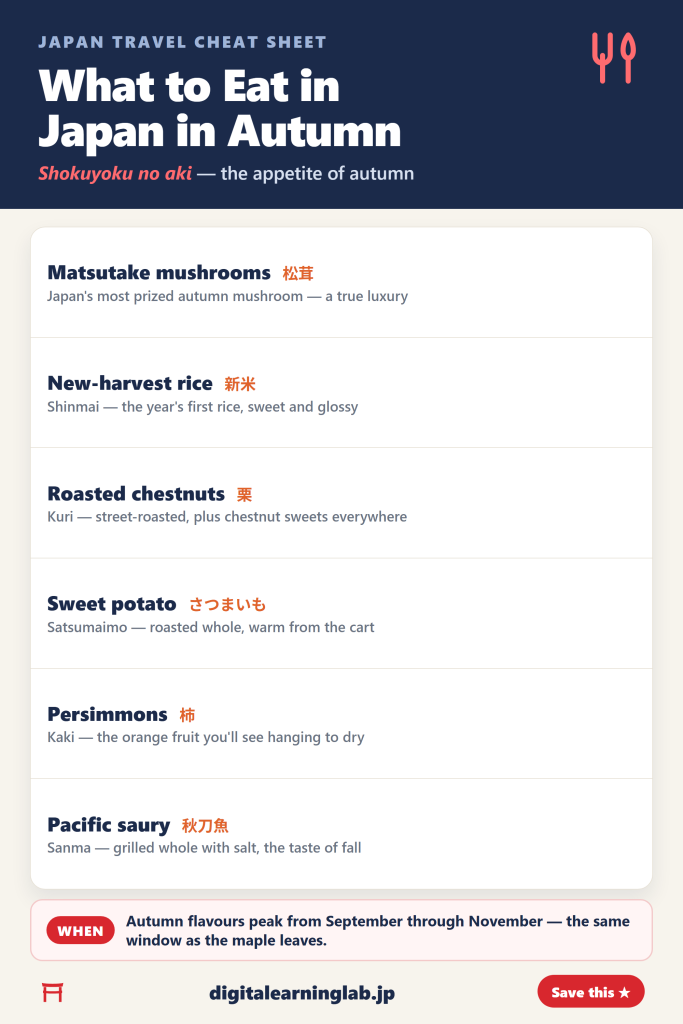
Matsutake are Japan’s most prized autumn mushroom, known for their rich aroma and firm texture. They’re a luxury ingredient, often served grilled, in a delicate clear soup (dobin mushi), or steamed with rice as matsutake gohan. Trying matsutake is a quintessential autumn experience — and a real treat if your budget allows.
2. New-harvest rice (shinmai)
Autumn is when the year’s rice is harvested, and freshly milled shinmai is prized for its glossy sheen, moisture, and subtle sweetness. Even a simple bowl of plain rice tastes noticeably better in fall. Look for restaurants advertising “新米” (shinmai) to taste the difference.
3. Roasted chestnuts & chestnut sweets
Chestnuts (kuri) appear everywhere in autumn, from roasted street snacks to elegant wagashi (traditional sweets) and the popular mont blanc chestnut cake. Kuri gohan, rice cooked with chestnuts, is another comforting seasonal favorite.
4. Sweet potato (satsumaimo)
The aroma of stone-roasted sweet potato (yaki-imo) is one of autumn’s signature smells in Japan. Sweet, warm, and satisfying, they’re sold from vans and stalls, and also appear in seasonal desserts, lattes, and limited-edition snacks throughout the fall.
5. Persimmons (kaki)
Bright orange persimmons are a classic autumn fruit, sweet and honey-like when ripe. You’ll see them piled high at markets and even hanging to dry into hoshigaki, a chewy, intensely sweet traditional treat.
6. Pacific saury (sanma)
Sanma is the fish of Japanese autumn. Traditionally grilled whole with a pinch of salt and served with grated daikon, its rich, oily flesh is at its best in fall. Look for it at izakaya and set-meal restaurants during the season.
Autumn drinks & seasonal treats
Autumn also brings a wave of limited-edition sweets, drinks and snacks:
- Chestnut & sweet-potato lattes at cafes and coffee chains.
- Momiji-themed sweets shaped like maple leaves, especially momiji manju, the maple-leaf-shaped cakes from Miyajima.
- Autumn sake — hiyaoroshi, a smooth seasonal sake released in fall after summer aging.
- Seasonal Kit Kats and convenience-store snacks in flavors like chestnut, sweet potato, and pumpkin.
Where to find the best autumn food
You don’t need a reservation at a fancy restaurant to eat well in autumn. Here’s where to look:
- Depachika (department store food halls): basement food floors packed with seasonal produce, sweets, and ready-made dishes.
- Izakaya: casual pubs that feature seasonal specials like grilled sanma and matsutake dishes.
- Local markets & street stalls: the best place for roasted chestnuts, yaki-imo, and fresh persimmons.
- Convenience stores: surprisingly good for limited-edition autumn snacks and desserts.
- Food tours: a guided tasting tour is a great way to discover seasonal dishes you might otherwise miss.
Regional autumn specialties worth traveling for
Japan’s autumn flavors change from region to region, so where you go shapes what you’ll taste:
- Kyoto: refined seasonal kaiseki cuisine and chestnut wagashi, best enjoyed alongside the city’s famous temple foliage.
- Hokkaido: the autumn harvest is legendary here — salmon and ikura (salmon roe), potatoes, corn, and dairy at their peak.
- Nagano & the mountains: prime territory for mushrooms, apples, and soba made from the new buckwheat harvest (shin-soba).
- Miyajima (Hiroshima): home of momiji manju, the maple-leaf-shaped cakes that are an autumn icon.
If you’re building an itinerary, check what food each region is known for before you pick your foliage spots.
Tips for eating your way through autumn in Japan
- Look for the kanji 秋 (autumn) or 季節限定 (seasonal limited) on menus and packaging — it signals seasonal specials.
- Use a translation app to read seasonal menus. Mobile data makes this much easier — see our best eSIM for Japan guide.
- Pair food with foliage. Many top autumn-leaf spots also have famous seasonal dishes nearby — plan them together.
- Carry some cash. Street stalls selling roasted chestnuts and sweet potato are often cash-only.
Frequently asked questions
When is autumn food season in Japan?
Roughly September through November, with peak harvest flavors in October and early November — the same window as the best autumn foliage.
Is autumn food in Japan expensive?
It ranges widely. Matsutake is a luxury, but roasted chestnuts, sweet potato, persimmons, and convenience-store seasonal snacks are cheap and easy to enjoy on any budget.
What’s the most iconic autumn dish?
Grilled sanma (Pacific saury) and matsutake mushrooms are the two flavors most associated with Japanese autumn.
Final thoughts
If you’re in Japan between September and November, look for 秋 or 季節限定 on menus and order grilled sanma at an izakaya. If your budget allows one splurge, make it matsutake.
Don’t miss: matsutake, grilled sanma, roasted chestnuts, new-harvest rice, sweet potato, and persimmons — the essential tastes of autumn in Japan.