Japanese Winter Food: 12 Dishes to Eat in Japan This Winter (2026-27)
Disclosure: This article contains affiliate links. If you book through them, we may earn a small commission at no extra cost to you. We only recommend services we believe are genuinely useful for travelers to Japan.
In a hurry? Japanese winter food, in short:
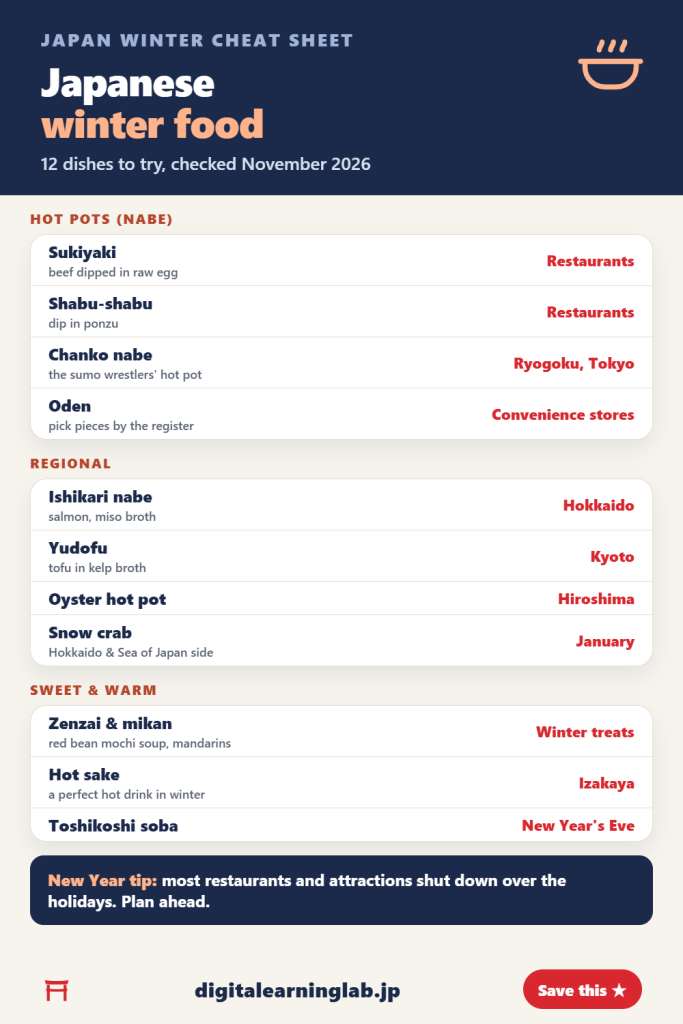
- Hot pots (nabe): sukiyaki, shabu-shabu and chanko nabe are a winter staple at many restaurants across Japan.
- Oden: in winter, many convenience stores sell it from pots next to the cash register. You pick the pieces you want.
- Regional dishes: salmon hot pot in Hokkaido, tofu hot pot in Kyoto, oysters in Hiroshima, and snow crab in January in parts of Hokkaido and the Sea of Japan side.
- Plan ahead for New Year: Japan’s tourism organization says most restaurants and attractions shut down during the New Year’s holidays.
Winter is hot pot season in Japan, and it is also when convenience stores bring out oden, vending machines switch to hot drinks and izakaya serve sake warm. This guide covers 12 Japanese winter foods, what each one is and where to try it. It draws on information from the Japan National Tourism Organization (JNTO) and GO TOKYO, Tokyo’s official travel guide, which we checked on November 2, 2026. Opening hours and prices change, so check each restaurant’s official website before you go.
Hot pots (nabe)
Nabe is hot pot: a mix of ingredients cooked together in a broth. JNTO calls it a staple you can find at many restaurants in the country, and GO TOKYO says it is served at specialty restaurants and at Japanese-style pubs called izakaya.
1. Sukiyaki
Thinly sliced beef with vegetables such as green onions and mushrooms, plus tofu, usually cooked in a broth with sugar. Once the meat is cooked, you dip it in raw egg. There are two regional styles: Kanto-style sukiyaki simmers all the ingredients together, while Kansai-style simmers the beef first and then adds the rest.
2. Shabu-shabu
Shabu-shabu is named after the sound the ingredients make in the broth. Beef is the usual choice, but pork, chicken and seafood also work. You dip each piece in citrus-based ponzu or another sauce.
3. Chanko nabe
The hot pot sumo wrestlers eat to build up their bodies. It has a dashi broth and can include chicken, beef, tofu and other proteins. In Tokyo, GO TOKYO suggests trying it in the Ryogoku area, home of the Ryogoku Kokugikan sumo arena. JNTO notes that some chanko restaurants are run by former wrestlers.
Tokyo also has motsu nabe (offal hot pot). GO TOKYO lists it with sukiyaki and shabu-shabu as hot pots you can find in the city.
4. Oden
Oden is a hot pot of ingredients such as daikon radish, egg, fish cake and konjac noodles simmered in broth. JNTO says it pops up all over in winter and can even be found in local convenience stores. A convenience store is the easiest place to start.
- At a convenience store: in winter, many convenience stores keep oden pots next to the cash register. You order the pieces you want, and GO TOKYO suggests taking it to a nearby park or bench.
- At an oden restaurant in Tokyo: GO TOKYO’s oden guide includes Asakusa Oden Otafuku, established in 1915 and one of the city’s oldest oden restaurants; Otakou in Nihonbashi, established in 1923, which uses a Kanto-style broth with a rich, dark soy sauce base and serves toumeshi, a tofu-topped rice bowl in oden broth; and Kayanoya Dashioden in Tokyo Midtown, which serves oden-style set meals at lunch.
- On the street: you’ll most likely also see oden vendors with small stalls around the city.
Regional winter hot pots
5. Ishikari nabe (Hokkaido)
Ishikari nabe is a hot pot from Hokkaido with a miso-based broth. Salmon, which the area is famous for, is an important part of the dish.
6. Yudofu (Kyoto)
A lighter hot pot: mainly tofu, boiled in kombu (kelp) broth with green onions. It is a Kyoto specialty, and according to JNTO, Kyoto is the best place to try it.
7. Oyster hot pot (Hiroshima)
Hiroshima is one of Japan’s most famous places for oysters, a winter specialty. The most common style is dote-nabe, with miso mixed with dashi stock. The miso melts into the soup as the oysters and other ingredients, like Chinese cabbage, cook.
8. Snow crab
JNTO calls snow crab a must-have in winter and says January is known as crab season in parts of Hokkaido and on the Sea of Japan side of the country.
In Sapporo: Klook sells a 120-minute shabu-shabu buffet at Kagayoi, a 1-minute walk from Odori Station, with all-you-can-eat crab (three types; Klook’s page doesn’t name them), Hokkaido beef and pork. There is a plan with all-you-can-drink, too. You can cancel for free with 7 days’ notice, and confirmation takes up to 48 hours.
Crab shabu-shabu buffet in Sapporo →
Sweet winter treats
9. Zenzai
Zenzai is a red bean soup with mochi, both sweet and warming: a classic winter treat.
10. Mikan
Mikan are mandarin oranges, and JNTO lists them among Japan’s seasonal winter eats. In Yamaguchi Prefecture they even have a hot pot named after them: JNTO calls mikan nabe a famous local winter dish.
11. Hot sake and hot drinks
Sake is served cold in summer, but in winter, as JNTO puts it, it makes a perfect hot drink. You can ask for hot sake at any izakaya or even at convenience stores. For something without alcohol, vending machines sell hot drinks in the cold months: hot drinks have a red label below them, cold drinks a blue one.
New to izakaya? Klook sells a 3-hour bar hopping tour in Shinjuku with a local guide: the first stop is in Omoide Yokocho, the second in Kabukicho (sushi, sashimi, yakitori and Japanese sake) and the last in Golden Gai. All drinks and food are included. You must be 20 or older, the legal drinking age in Japan, and bring ID. If you’d rather eat than drink, Klook’s Shinjuku food tour visits four local eateries for 15 dishes, including yakitori, gyoza, karaage and sashimi, with an English-speaking guide. The food tour isn’t winter-only and doesn’t include hot pot or oden. Both tours can be canceled for free with 24 hours’ notice.
Shinjuku bar hopping tour → Shinjuku food tour →
12. Toshikoshi soba (New Year’s Eve)
On New Year’s Eve, people eat toshikoshi soba, buckwheat noodles in hot broth, to mark the year passing; the long noodles stand for a long life. If you’re in Japan for New Year, plan your meals ahead: JNTO says most restaurants and attractions shut down during the New Year’s holidays.
Bonus: strawberry picking
In Tochigi Prefecture, strawberry picking runs from winter into spring. JNTO’s Tochigi guide says the season is mostly from December to May and mentions a farm where you can eat all you can within a time limit. Farms are also found around Nikko and Nasu. On some days farms don’t take visitors, and some are fully booked, so check the schedule first.
From Tokyo: Klook sells a day trip from Tokyo (Shinjuku) to Mt. Fuji Yeti ski resort. With the “Play in the snow & pick strawberries” plan, the group drives to Izu Fruit Park in the afternoon for 30 minutes of unlimited strawberry picking and tasting. Klook notes that, depending on ripeness and the weather, the strawberries may already be laid out for you to eat. Free cancellation with 24 hours’ notice; confirmation within 48 hours.
Snow play & strawberry picking day trip →
Frequently asked questions
What is a typical Japanese winter food?
Hot pot (nabe). GO TOKYO calls nabe a staple of Japanese winter, and JNTO says it becomes a popular meal both at home and in restaurants across Japan. Sukiyaki, shabu-shabu and chanko nabe are three kinds you can find in Tokyo.
Can I buy oden at a convenience store?
Yes, in winter. Many convenience stores keep oden pots next to the cash register, and you order the pieces you want.
When is crab season in Japan?
JNTO says January is known as crab season in parts of Hokkaido and on the Sea of Japan side of the country.
Are restaurants open over New Year in Japan?
Many aren’t. JNTO says most restaurants and attractions shut down during the New Year’s holidays, so plan ahead and check opening days on each restaurant’s website.
Final thoughts
If you only try a few Japanese winter foods, make one a hot pot at a restaurant, grab oden at a convenience store, and order hot sake at an izakaya. Head to Hokkaido or the Sea of Japan side in January for snow crab. Over New Year, plan where you’ll eat, because most restaurants close.
Sources
- JNTO: Winter Delicacies: All About Nabe
- JNTO: Share the warmth of a hotpot during the cold weather
- JNTO: Japan’s Seasonal Eats
- JNTO: Keeping Warm Like a Local in Japan
- JNTO: Winter in Japan
- JNTO: Strawberry picking (Tochigi)
- GO TOKYO: Tokyo Winter Guide
- GO TOKYO: Tokyo’s Oden Scene
Planning a winter trip? See our guide to a ski day trip from Tokyo to GALA Yuzawa and choosing an eSIM for Japan.